Hulu — AI-Powered Content Recommendation Ad
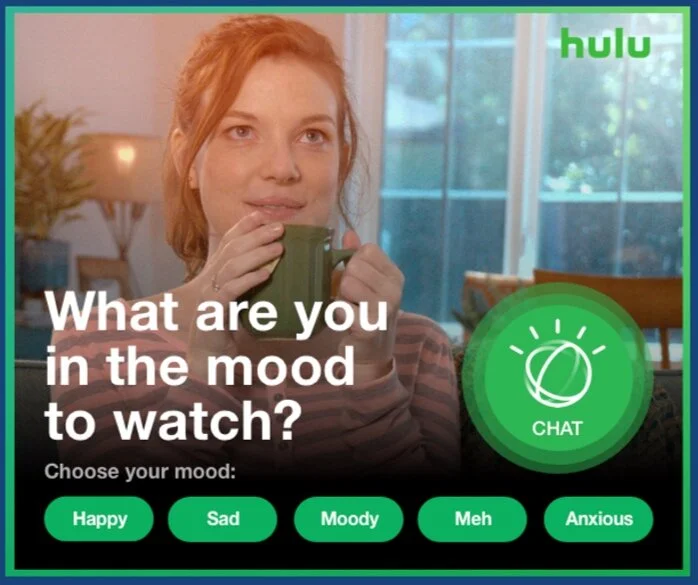
Hulu partnered with us to build an AI‑powered recommendation experience for Hulu with Live TV. Our goal wasn’t just to suggest shows — it was to understand how people describe what they want to watch in their own words and use that to connect them with content that actually fit their mood, context, and preferences.
On this project, I led the design of the recommender flow and the logic that linked user input to results. That included sentiment‑scoring nearly 100 titles so the system could align recommendations with emotional intent, building the FAQ corpus and conversation structure to support practical questions about streaming packages and service details, and mapping genre preferences to patterns like time of day.
We randomized open‑ended questions to surface users’ intent and sentiment, interpreted those responses to offer tailored recommendations, and allowed follow‑up exploration.
Outcome
The experience drove sustained engagement and performed well beyond rich media benchmarks.
Campaign results included:
44M total impressions served
18K active user sessions
3.5K conversations
14K total button clicks, including 3K clicks to hulu.com
3.7× more time spent in the unit compared to Google Rich Media interaction benchmarks
The chatbot was able to provide in-scope responses 99% of the time, which contributed to:
1.3× more activations
1.1× more conversations
1.1× higher active user sessions on The Weather Channel mobile app
1.7× higher active user sessions on weather.com desktop
My Role
I designed the recommender flow and the underlying logic that connected user input to content recommendations.
This included:
Running sentiment scoring on nearly 100 Hulu movies and TV titles so the system could align content with emotional intent
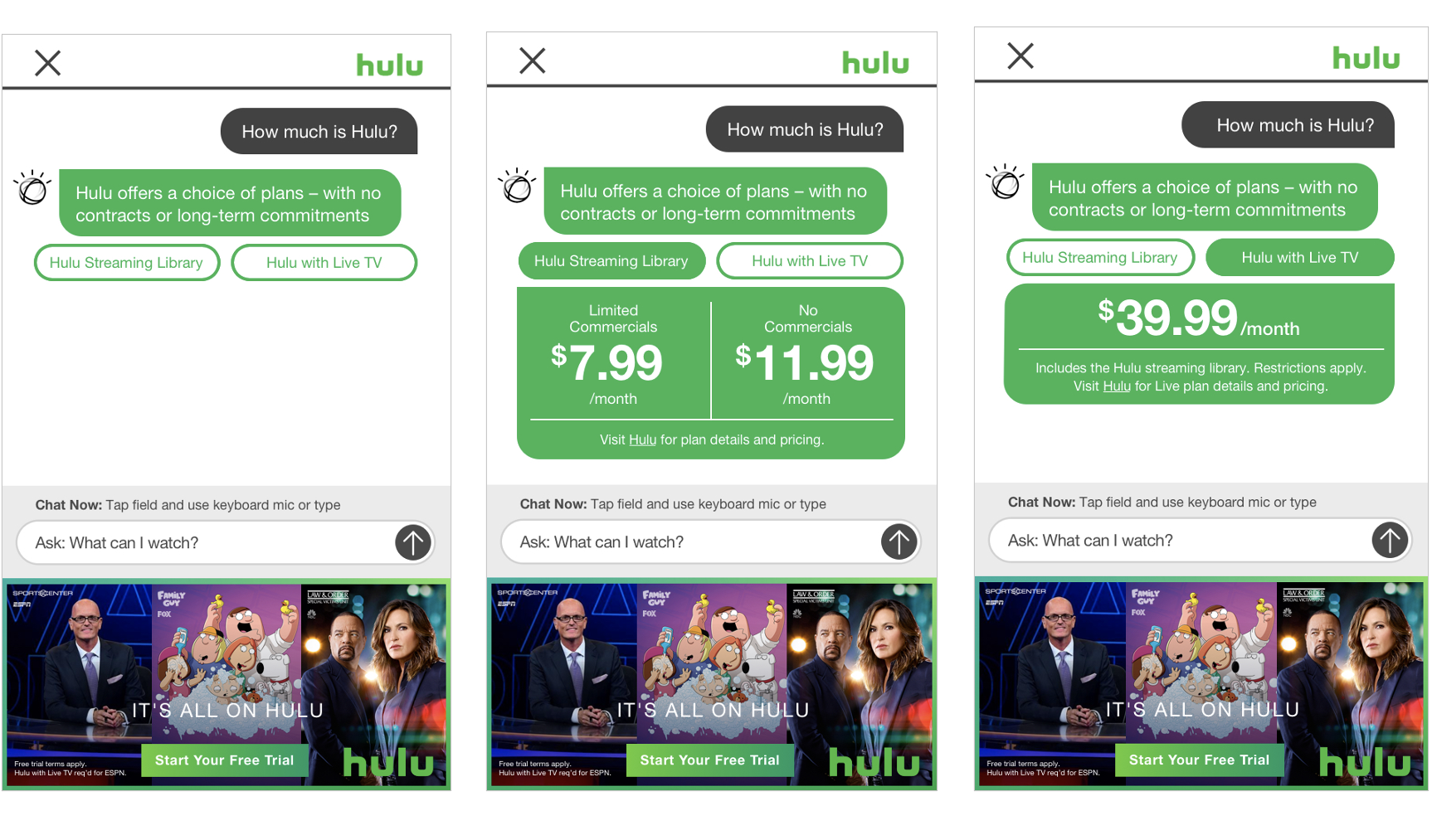
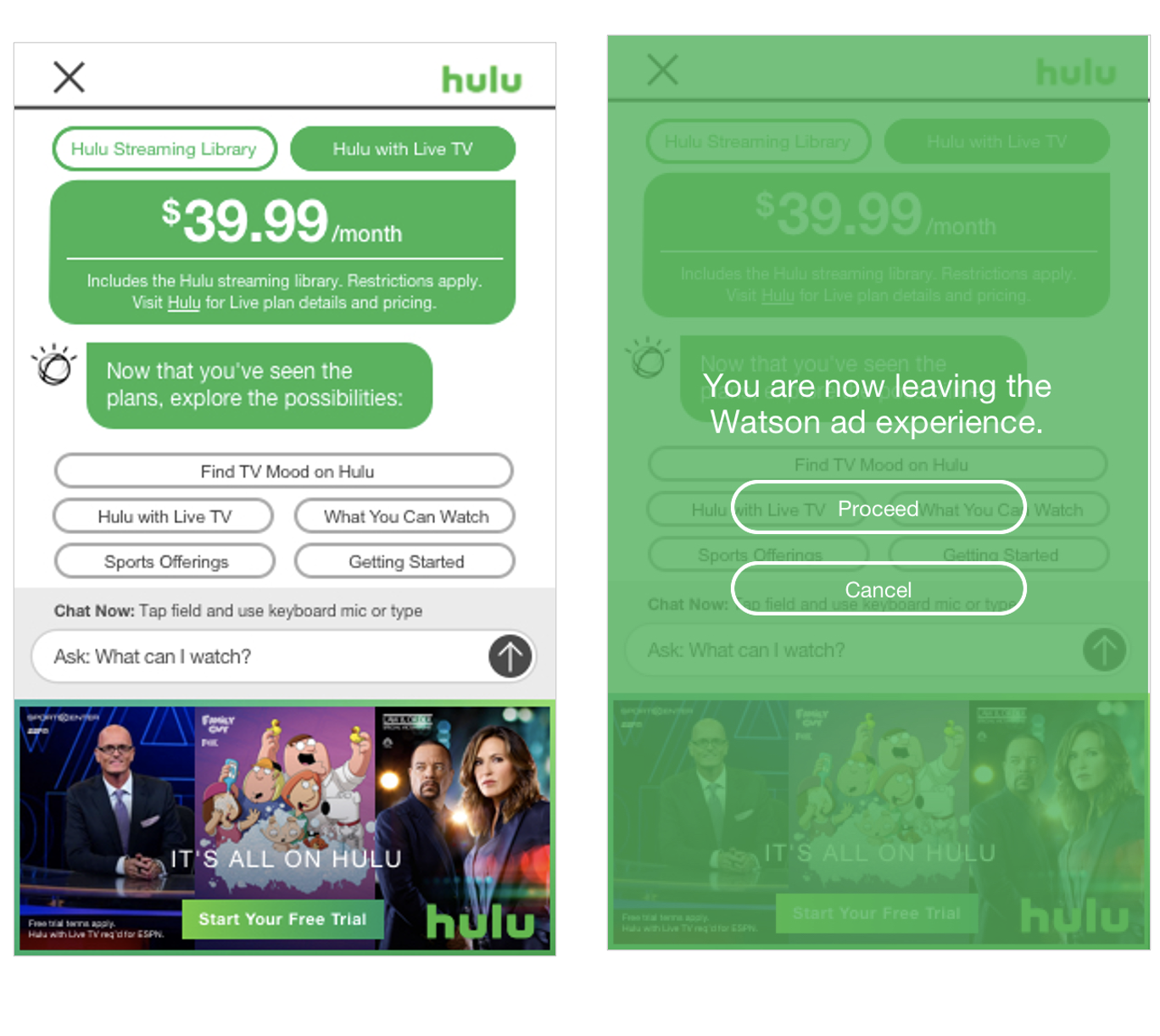
Creating the FAQ corpus and conversation flow based on Hulu’s site, covering questions about streaming packages, sign-up, and general service details
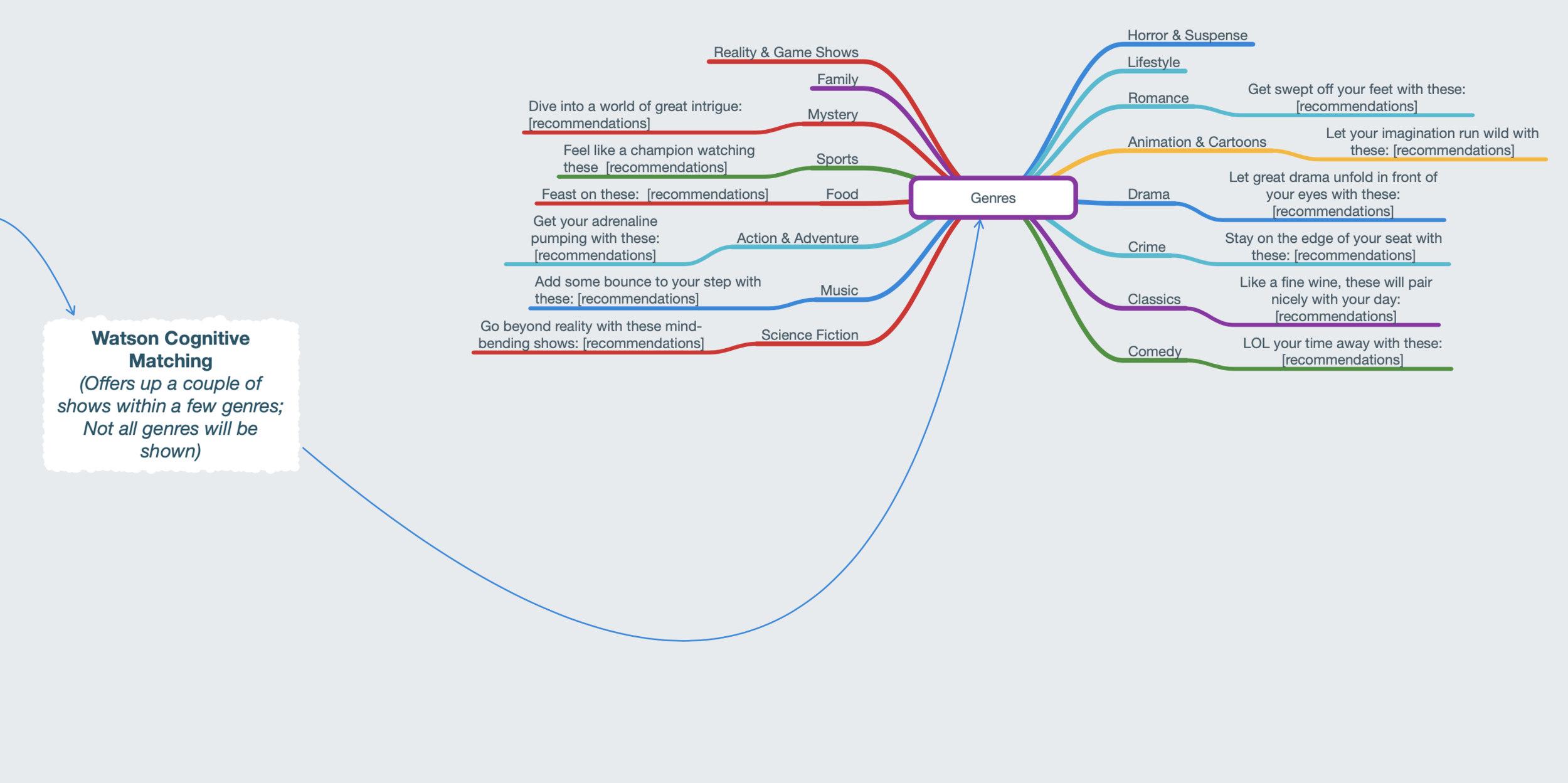
Mapping genre preferences to time-of-day patterns, based on research showing lighter content is typically preferred earlier in the day and heavier content later on
The goal was to make the system feel responsive without pretending to know more than it did.
Conversation Design
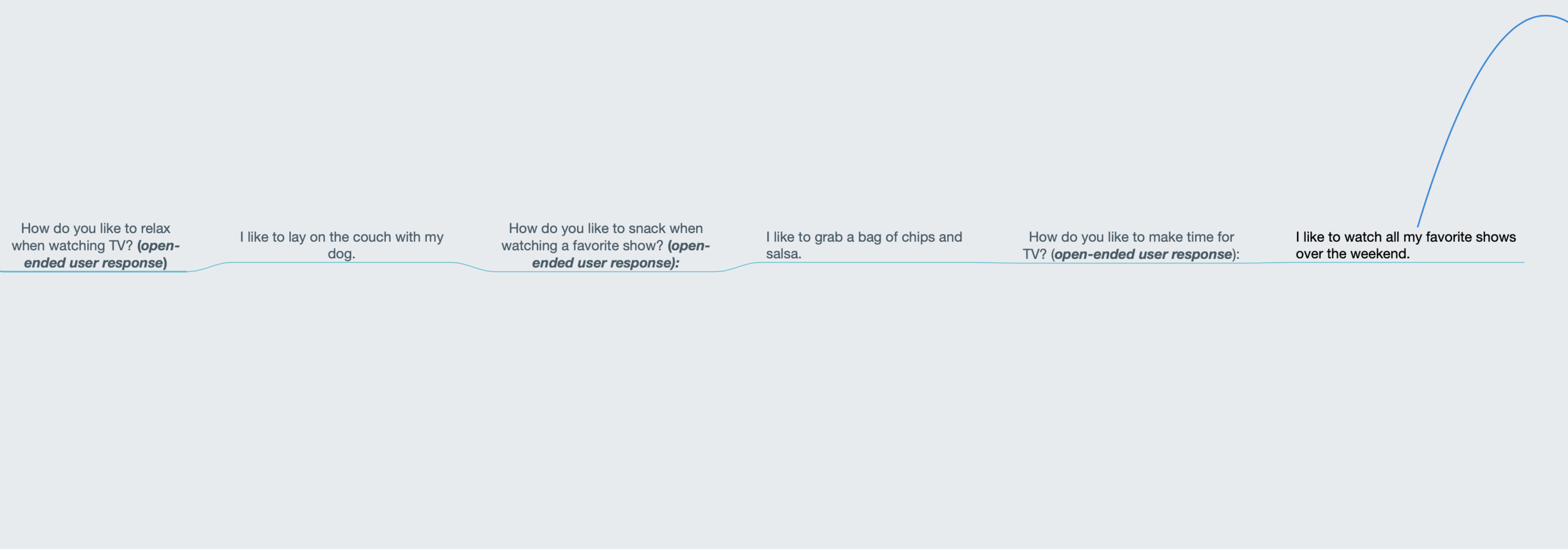
Each user was served one of three open-ended questions. Questions were randomized so users wouldn’t see the same prompt if they re-entered the experience, and users could skip the question entirely.
Based on their response, the system:
Interpreted sentiment and context
Offered a set of content recommendations
Allowed users to explore titles or ask follow-up questions
In parallel, the FAQ flow handled practical questions about Hulu’s service, keeping the experience useful even when users weren’t focused on recommendations.
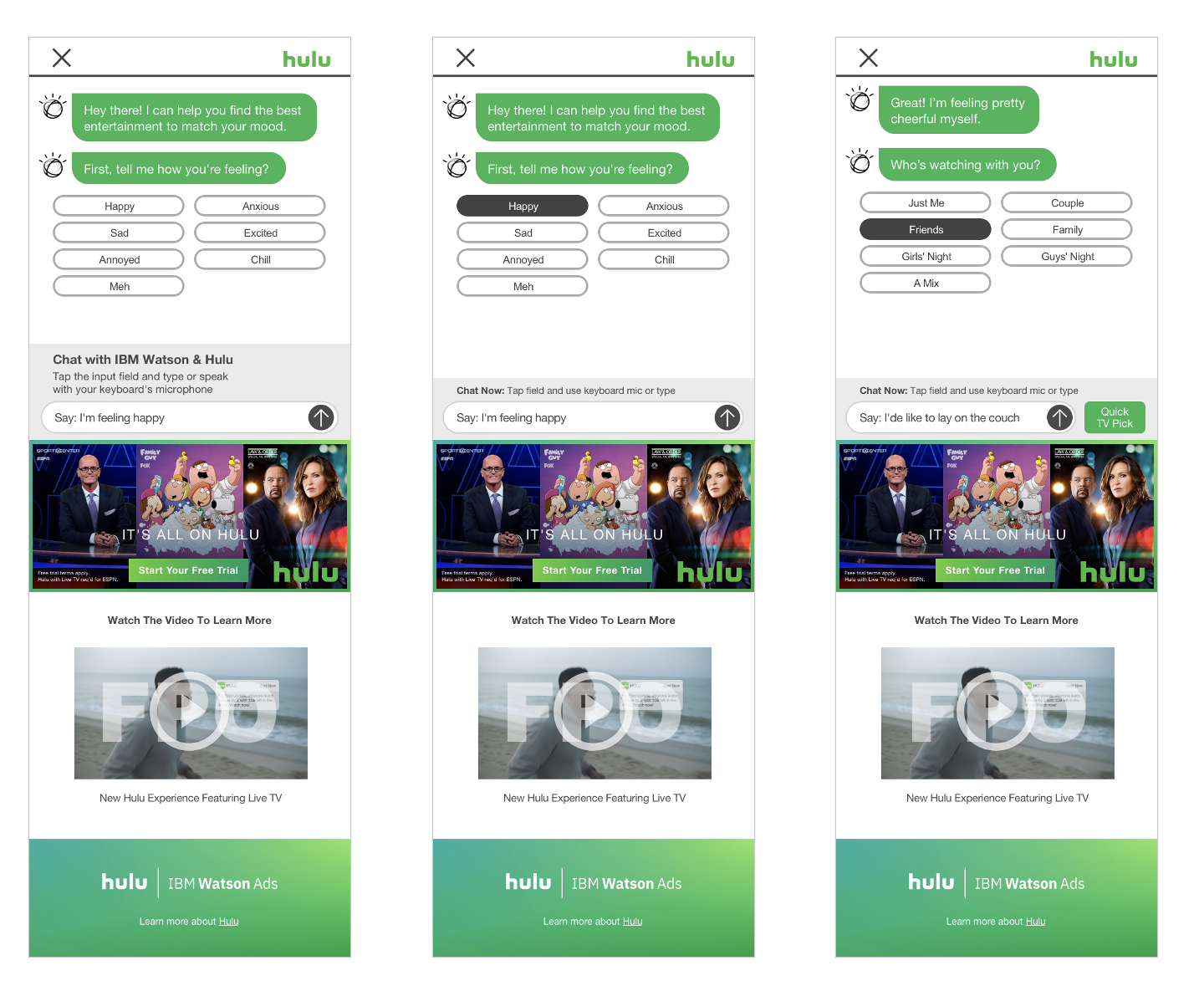
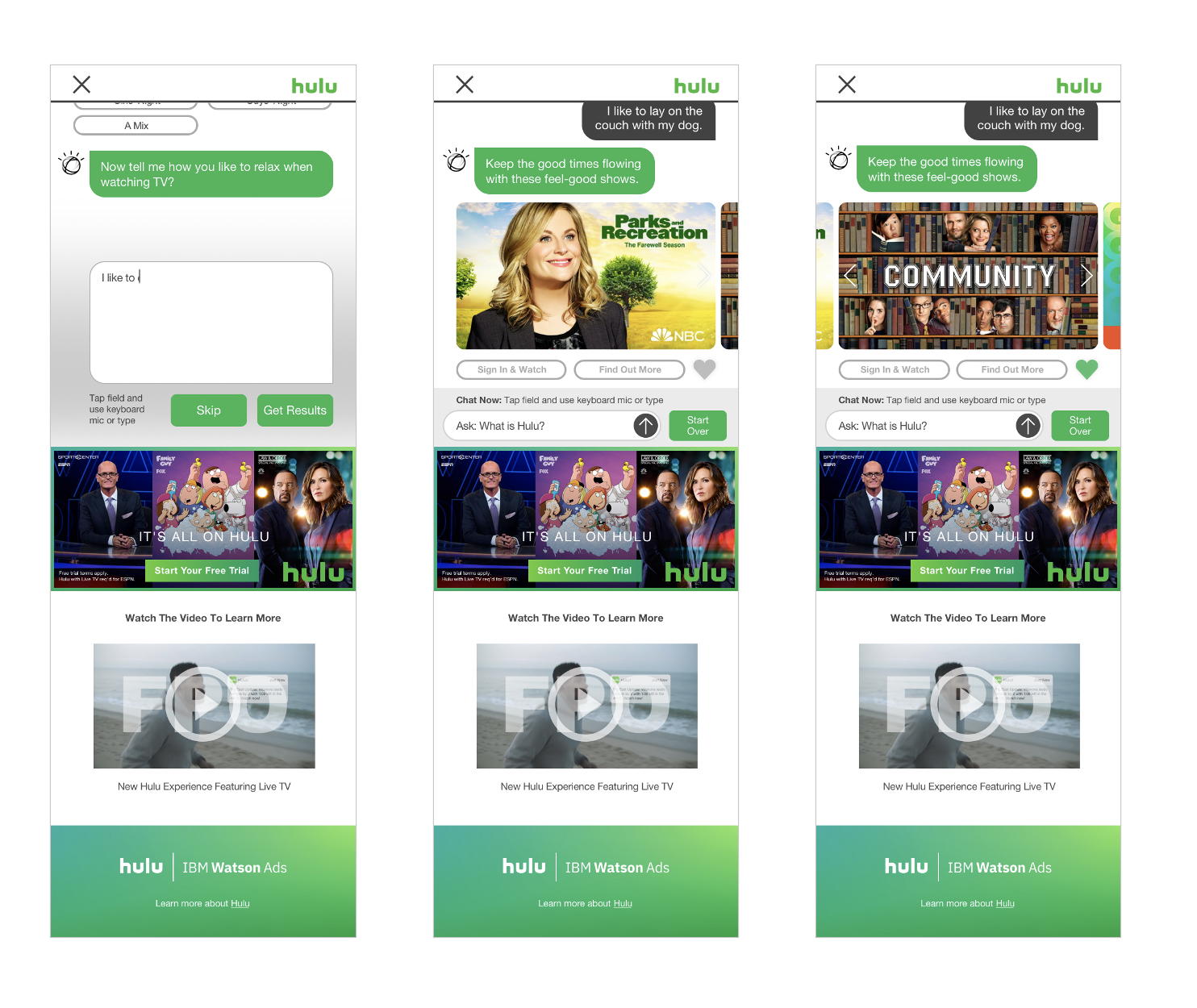
Abbreviated sample flow
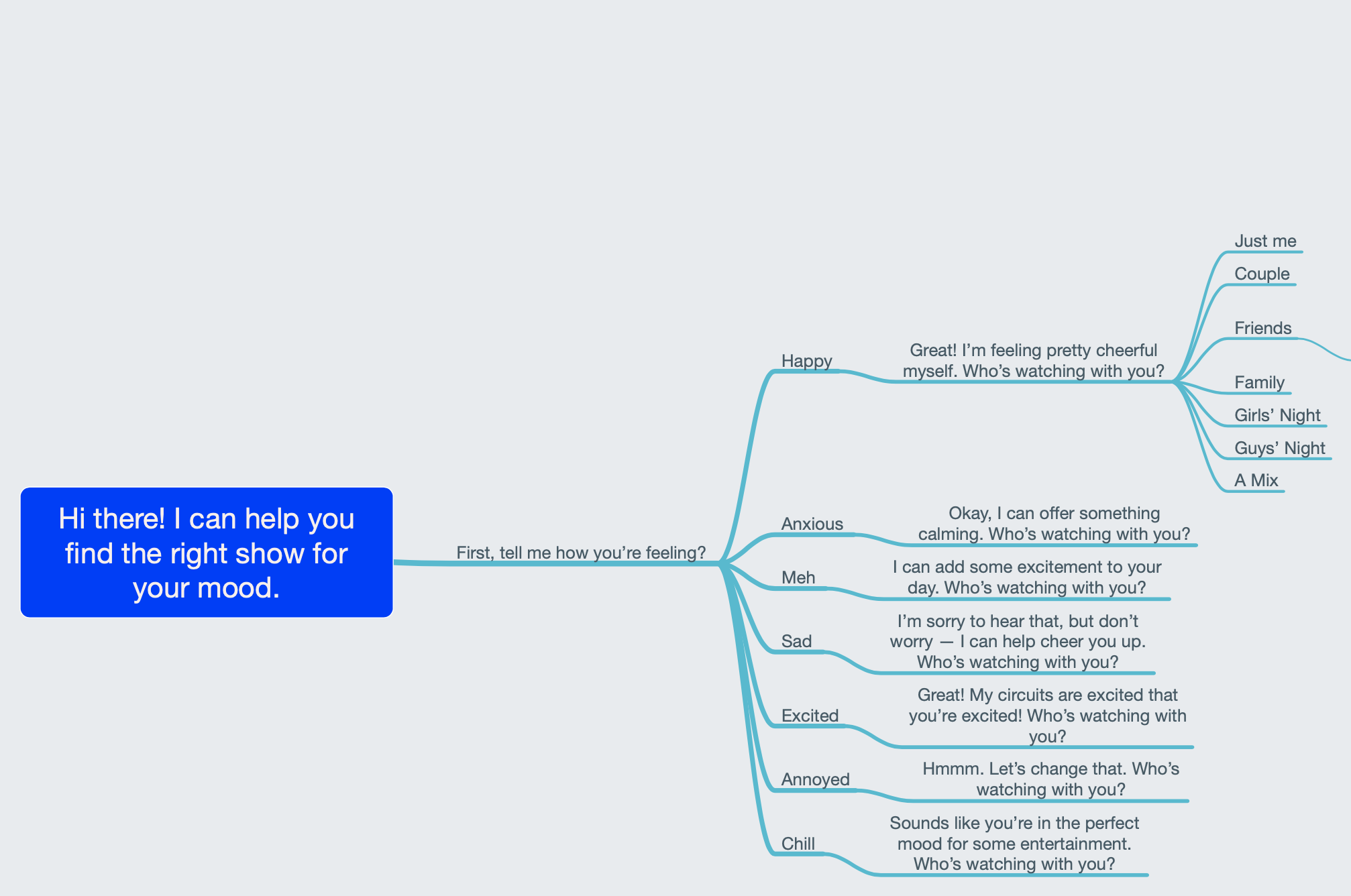
Conversation Flow In Unit
Sample FAQ Flow from User Question